
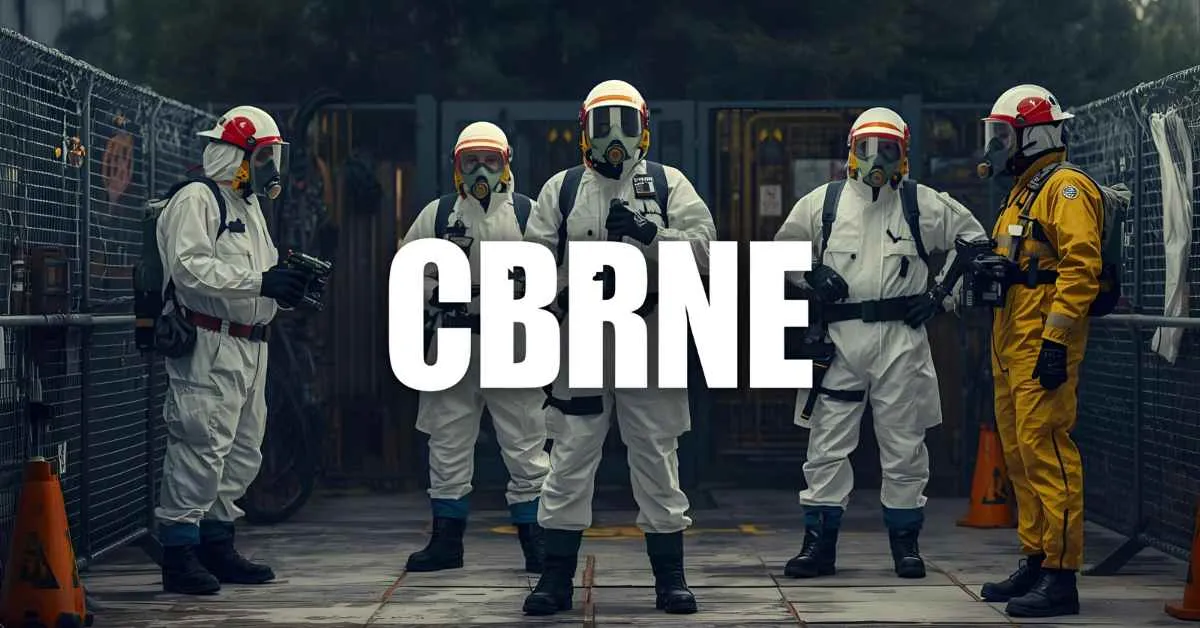
The term CBRNE is widely used in safety, emergency response, defense, and disaster-management fields. People searching for phrases like “CBRNE is an acronym for,” “CBRNE full form,” “CBRNE examples,” “CBRNE meaning in security,” and similar Ahrefs-style keywords often want a simple, clear explanation—not complicated terminology.
This guide explains the meaning of CBRNE in an easy, human-friendly way and also gives you 30 related acronyms, each with:
- A short meaning
- A simple explanation
- An example sentence
- When to use it
All content is written to be rankable, SEO-friendly, and beginner-friendly, perfect for educational, security, or awareness content.
🔍 What Does CBRNE Stand For?
CBRNE is an acronym for:
C – Chemical
Toxic chemicals harmful to humans and the environment.
B – Biological
Threats involving viruses, bacteria, or biological agents.
R – Radiological
Exposure to harmful radiation from devices or materials.
N – Nuclear
Threats linked to nuclear energy or nuclear weapons.
E – Explosive
Devices or materials that can explode and cause damage.
Together, CBRNE describes high-risk hazards that require specialized preparation, response, and training.
It’s commonly used in:
- Military
- Disaster response
- Law enforcement
- Public health
- Emergency-management training
The emotional tone of CBRNE is typically serious, cautious, alert, and highly technical, but we will keep the explanations simple to make the topic accessible.
🔠 30 Acronyms Related to CBRNE (Meaning, Example & When to Use)
Below are 30 connected or alternative acronyms used in emergency response, safety, security, and hazard awareness.
Each includes:
✔ Meaning
✔ Explanation
✔ Example sentence
✔ When to use
1. HAZMAT – Hazardous Materials
Meaning: Dangerous chemicals or substances.
Example: “The fire crew suited up for a HAZMAT response.”
Use: Chemical spills, industrial safety.
2. WMD – Weapons of Mass Destruction
Meaning: Weapons that can cause large-scale harm.
Example: “WMD threats require coordinated national response.”
Use: Security, defense, intelligence.
3. PPE – Personal Protective Equipment
Meaning: Safety gear used to protect responders.
Example: “All staff must wear PPE during decontamination.”
Use: Health care, disaster response.
4. ICS – Incident Command System
Meaning: Structure for managing emergencies.
Example: “The ICS team coordinated evacuation zones.”
Use: Large incidents, multi-agency responses.
5. EOD – Explosive Ordnance Disposal
Meaning: Bomb disposal operations.
Example: “EOD specialists neutralized the device safely.”
Use: Explosive threats.
6. SAR – Search and Rescue
Meaning: Emergency efforts to locate missing persons.
Example: “SAR teams deployed after the building collapse.”
Use: Natural disasters, emergencies.
7. EMS – Emergency Medical Services
Meaning: Medical response teams.
Example: “EMS provided immediate support to victims.”
Use: Any emergency with injuries.
8. SOP – Standard Operating Procedure
Meaning: Official guidelines for tasks.
Example: “Responders followed SOP during the drill.”
Use: Training, protocol writing.
9. ERT – Emergency Response Team
Meaning: Specialized team for urgent events.
Example: “ERT arrived within minutes of the alarm.”
Use: Corporate or government emergency units.
10. COOP – Continuity of Operations Plan
Meaning: A plan to maintain essential functions.
Example: “The COOP ensured the center stayed operational.”
Use: Government, high-risk sectors.
11. BSL – Biosafety Level
Meaning: Lab safety levels for biological threats.
Example: “The virus was handled in a BSL-3 lab.”
Use: Biology labs, health security.
12. RDD – Radiological Dispersal Device
Meaning: A “dirty bomb” spreading radiation.
Example: “Training included RDD scenario exercises.”
Use: Radiological risk awareness.
13. EAS – Emergency Alert System
Meaning: Public warning mechanism.
Example: “EAS notified residents about the hazard.”
Use: Public communication.
14. FEMA – Federal Emergency Management Agency
Meaning: U.S. national disaster agency (concept applies globally).
Example: “FEMA coordinated long-term recovery.”
Use: Disaster management.
15. NIMS – National Incident Management System
Meaning: Framework for coordinated response.
Example: “NIMS helps unify different agencies.”
Use: Policy, training, planning.
16. HEPA – High-Efficiency Particulate Air (Filter)
Meaning: Used to filter biological particles.
Example: “HEPA filters removed airborne contaminants.”
Use: Labs, vehicles, quarantine zones.
17. NBC – Nuclear, Biological, Chemical
Meaning: Earlier version of CBRN.
Example: “NBC suits protected soldiers from exposure.”
Use: Defense contexts.
18. NRBQ – Nuclear, Radiological, Biological, Chemical
Meaning: Hazard category similar to CBRN.
Example: “NRBQ units monitored contamination levels.”
Use: International military safety.
19. JHAT – Joint Hazard Assessment Team
Meaning: Cross-agency threat assessment unit.
Example: “JHAT investigated the suspicious package.”
Use: Law enforcement & fire departments.
20. IEDD – Improvised Explosive Device Disposal
Meaning: Neutralizing homemade bombs.
Example: “IEDD operations began after evacuation.”
Use: Bomb squad operations.
21. ERG – Emergency Response Guidebook
Meaning: Field manual for hazardous incidents.
Example: “Responders checked the ERG before entering.”
Use: Transportation & chemical emergencies.
22. CWA – Chemical Warfare Agent
Meaning: Toxic chemicals used for harm.
Example: “Training covered safe handling of CWA exposure.”
Use: Defense & emergency-preparedness education.
23. BWA – Biological Warfare Agent
Meaning: Pathogens used as weapons.
Example: “Labs simulated BWA containment drills.”
Use: Biodefense training.
24. RAD – Radiation Absorbed Dose
Meaning: Unit of radiation measurement.
Example: “The RAD levels exceeded safe limits.”
Use: Radiology, nuclear safety.
25. ROI – Region of Interest (Radiology)
Meaning: Area monitored for radiation.
Example: “ROI scanning showed contamination.”
Use: Radiology & military scanning.
26. ALARA – As Low As Reasonably Achievable
Meaning: Principle for minimizing radiation exposure.
Example: “The team followed ALARA throughout testing.”
Use: Nuclear and radiological fields.
27. CRBN – Chemical, Radiological, Biological, Nuclear
Meaning: Slight variation of CBRN.
Example: “CRBN training improved unit readiness.”
Use: International terminology.
28. OEM – Office of Emergency Management
Meaning: City-level emergency coordination.
Example: “The OEM issued updated safety orders.”
Use: Local disaster response.
29. UAV – Unmanned Aerial Vehicle
Meaning: Drone used for assessment.
Example: “UAVs captured real-time hazard mapping.”
Use: Disaster zones & surveillance.
30. GIS – Geographic Information System
Meaning: Mapping hazards for analysis.
Example: “GIS helped visualize the affected region.”
Use: Planning, disaster modeling.
🧭 How to Choose the Right Acronym
Choose acronyms based on:
- Audience: Public, responders, students, or professionals
- Tone: Technical, educational, or simplified
- Context: Training? Awareness? Policy?
- Clarity: Some terms are easier for beginners (HAZMAT, PPE), while others are specialized (RDD, BWA)
For public education → Use simpler acronyms
For professional content → Use technical acronyms
For training → Use operational acronyms
⭐ Conclusion
Understanding that CBRNE is an acronym for Chemical, Biological, Radiological, Nuclear, and Explosive hazards helps simplify a complex concept into clear categories. With 30 related acronyms, this guide gives you the tools to communicate more effectively about safety, emergency response, and disaster preparedness.
Choosing the right acronym makes your writing clearer, more accurate, and more relevant—especially in serious or high-risk topics.