
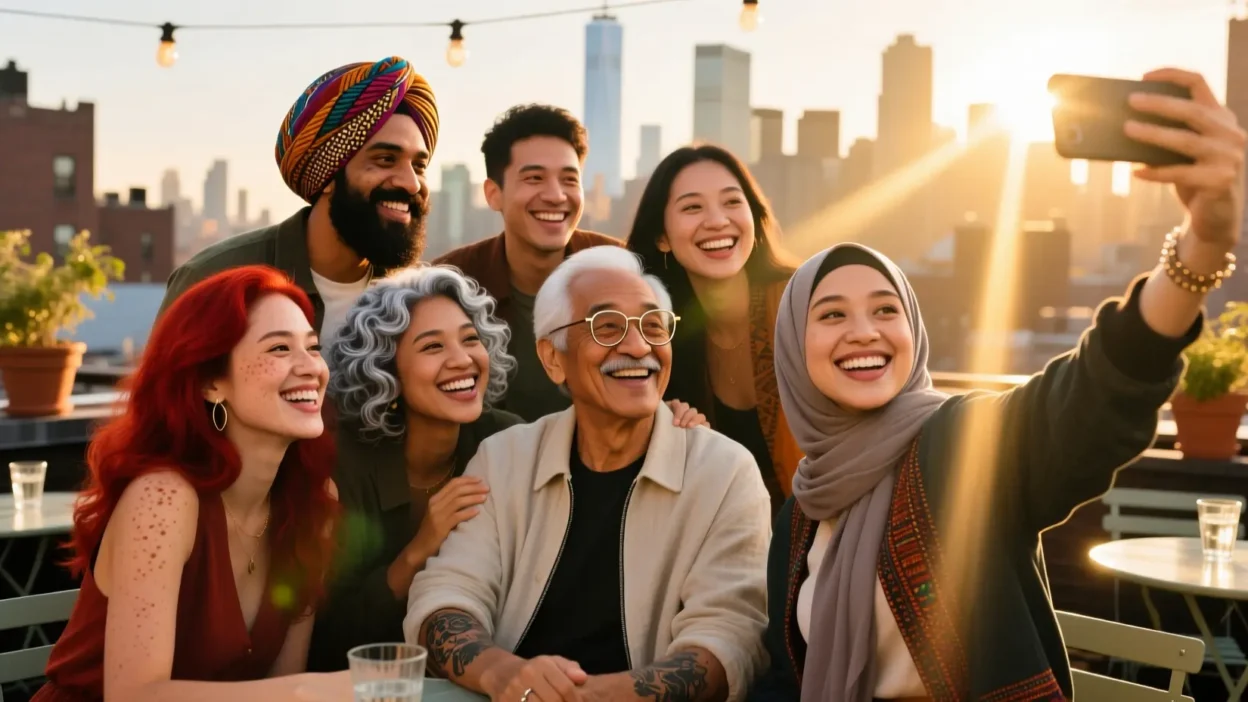
You’ve probably seen the word “diverse” pop up in conversations, job posts, school brochures, or social media captions and maybe wondered,
Okay, but what does diverse actually mean?” I remember the first time I saw a company saying they wanted a “diverse team.”
I nodded along like I understood… but deep down, I was like, “Umm, diverse in what way?” 😅
If you’ve felt that same confusion, you’re not alone.
Quick Answer: Diverse means showing a wide range of differences whether it’s people, cultures, opinions, backgrounds, or experiences. It’s a neutral and descriptive word used to highlight variety and inclusion.
🧠 What Does Diverse Mean in Text?
The word diverse simply means “different or varied in many ways.”
It’s often used when talking about people from different backgrounds, ideas that are not the same, or groups made up of multiple types of individuals.
Example sentence:
“Our class is very diverse students come from all over the world.”
In short: Diverse = many differences = variety in people, ideas, or things.
📱 Where Is “Diverse” Commonly Used?
You’ll see diverse used in many contexts, especially where variety or inclusion is discussed. Common places include:
- 📚 School & College essays
- 🏢 Workplaces & HR posts (“We value diverse teams”)
- 🌐 Social media (Instagram captions, advocacy posts)
- 📝 Blogs & articles
- 💬 Everyday conversation
- 🎥 Documentaries or interviews
Tone:
✔ Neutral
✔ Positive
✔ Professional-friendly
✔ Social-media friendly
It’s not slang, but a common vocabulary word often used to describe groups, perspectives, or environments.
💬 Examples of “Diverse” in Conversation
Here are realistic, short chat-style examples:
1.
A: what’s your college like?
B: super diverse! ppl from everywhere 😄
2.
A: how’s your new workplace?
B: pretty diverse, lots of different cultures
3.
A: what’s the event about?
B: promoting diverse voices in the community 🎤
4.
A: why do u like that show?
B: the cast is really diverse 🤝
5.
A: your friend group seems fun!
B: yeah we’re all so different lol, very diverse
6.
A: what makes the city special?
B: its diverse food scene 😍
7.
A: why did they hire him?
B: they want a more diverse team
🕓 When to Use and When Not to Use “Diverse”
✅ When to Use “Diverse”
- Talking about people from different backgrounds
- Describing groups with variety
- Referring to cultures, ideas, food, experiences
- Writing school assignments
- Posting on social media about inclusion
- Professional or HR contexts
❌ When Not to Use “Diverse”
- When describing only one person (diverse = group difference, not individual)
- In extremely formal legal writing
- When variety isn’t involved
- To sugarcoat serious issues
- When a simpler word like “different” suffices
Comparison Table
| Context | Example Phrase | Why It Works |
| Friend Chat | “our group is super diverse 😄” | Casual & descriptive |
| Work Chat | “We’re looking to build a diverse team.” | Professional & clear |
| “A diverse range of perspectives strengthens our work.” | Formal & appropriate | |
| Social Media | “Love how diverse this city is 🌆” | Friendly & expressive |
| School Assignment | “A diverse sample improves research accuracy.” | Academic & precise |
🔄 Similar Words or Alternatives
| Word/Slang | Meaning | When to Use |
| Varied | Shows many differences | Describing options, choices, categories |
| Inclusive | Welcoming different people | Workplaces, social initiatives |
| Multicultural | Many cultures present | Cities, schools, events |
| Mixed | Combination of types | Groups, opinions, music genres |
| Different | Not the same | Basic descriptions |
| Diverse group | Variety of people | Professional & everyday use |
❓ FAQs
1. Can you call one person “diverse”?
No diverse describes a group, not an individual.
2. Is “diverse” a positive word?
Yes. It’s usually used to show appreciation for variety and inclusion.
3. Does “diverse” only refer to people?
No! It can describe food, cultures, ideas, landscapes, music, and more.
4. Is “diverse” slang?
No it’s a standard English vocabulary word, not internet slang.
5. What’s a simple synonym?
“Varied” or “different.”